Research
The lab has a keen interest in the fundamental mechanisms that regulate RNA Polymerase II activity across eukaryotic genomes, and their implications on human health.

Mechanism of Transcription Termination
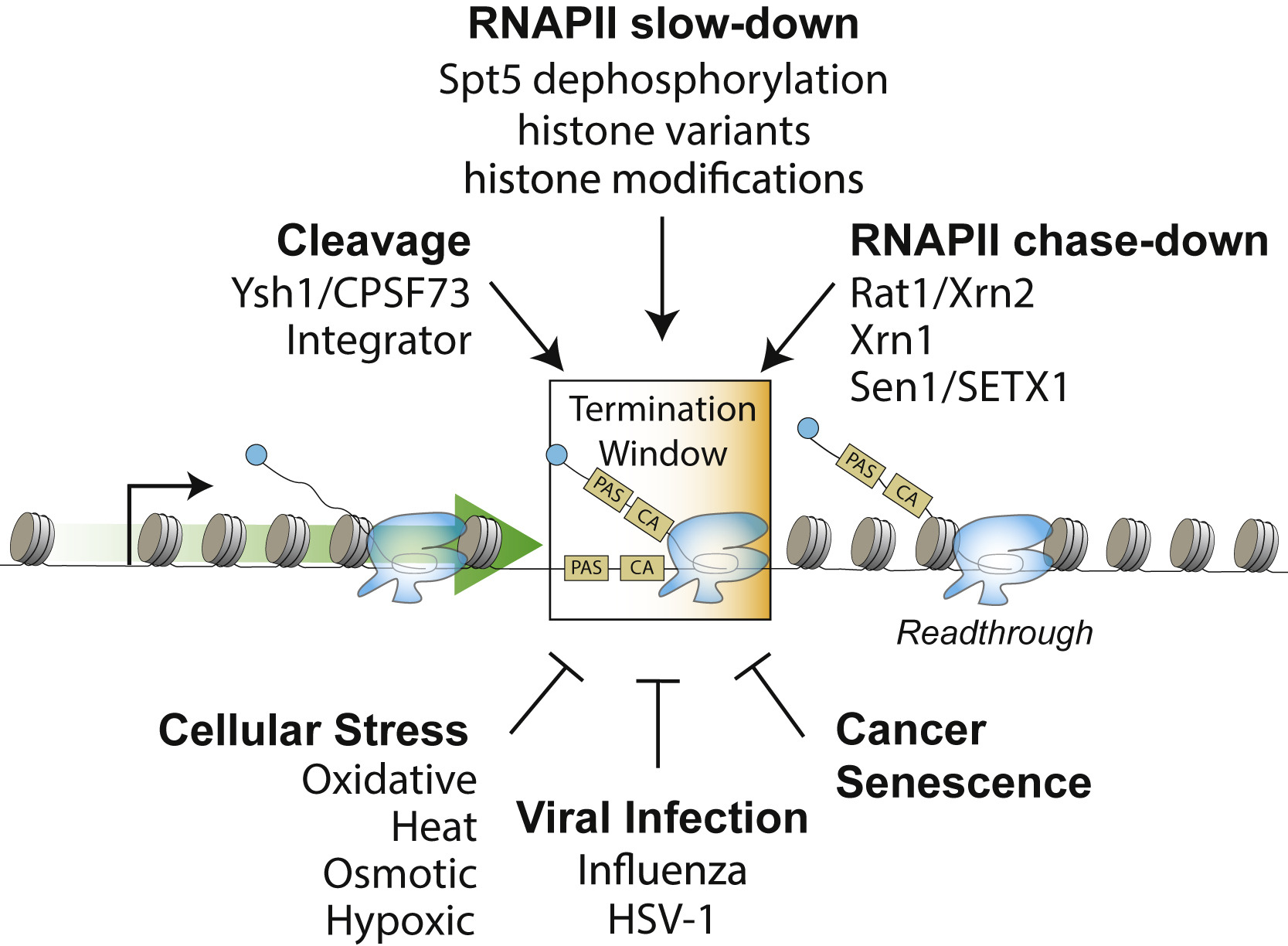
We are deeply interested in the fundamental understanding of how RNA Polymerase II (Pol II) transcription is terminated. We use in vitro reconstitution of multi-subunit protein complexes in combination with functional assays and structural approaches (e.g., cryoEM) to understand how transcribing Pol II is evicted from its DNA template.
Termination in stress and disease
In many cancers, infections, and stress Pol II fails to terminate and continues transcribing downstream of the 3'-end of genes. These termination defects can impact the expression of downstream genes (both positively and negatively) and alter a cell's gene expression program. It is entirely unclear why or how this happens, or whether any of these termination defects have an adaptive function. By using cell-based assays, genetic screens and chemical-genomics we aim to understand the impact of altered transcription termination in healthy vs. diseased or stressed cells.